Do you have a question or need help?
Give us a call or send us an email at:
Department of Drama
249 Drama
(949) 824-6614
drama@uci.edu
M.F.A. Design
Sound Design


The M.F.A. Scene Design program recruits new classes every other year. We will accept applications beginning October 2026 for admittance to the 2027-28 academic year.
A Brief Introduction
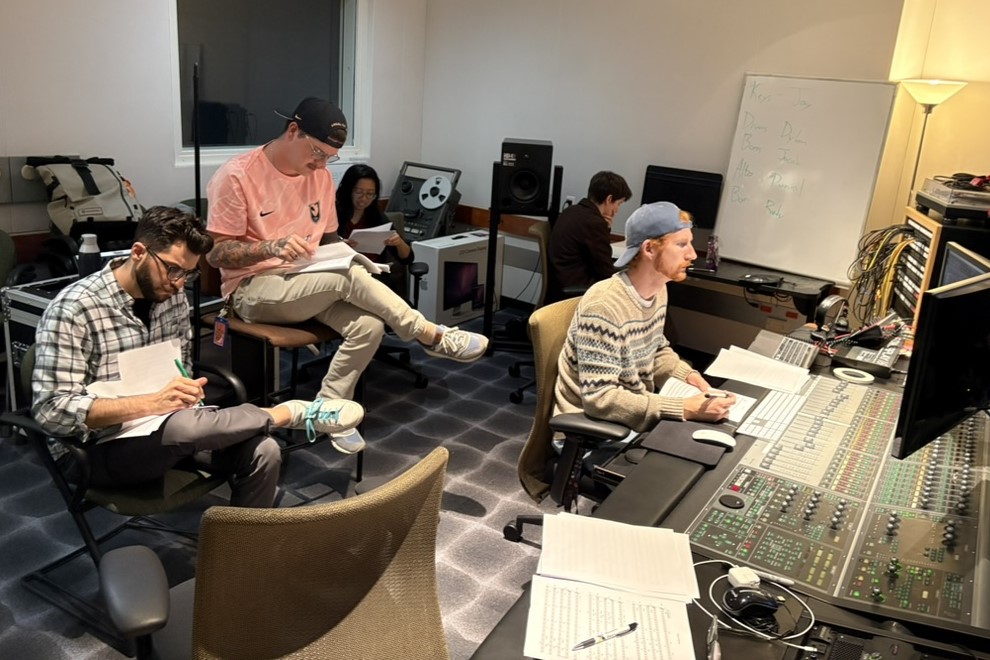
Sound is one of the fastest-growing and most forward-looking areas of design in theater and the entertainment industry. UCI is well positioned to educate, guide and prepare students for successful careers after graduation. The program emphasizes a critical balance of theatrical aesthetics and process, audio engineering, music and professional practice, shaped by each student’s individual interests and goals. Combined with comprehensive training in current sound technologies, the UCI sound design graduate is prepared for both traditional theater and emerging digital environments.
Preparation for a Career in Sound Design
At UCI, we believe a strong theatrical foundation can serve as a springboard to careers both within and beyond theatrical sound design. Our alumni reflect that range. Some have built successful careers in theater sound design around the world, while others work in postproduction for film and television, sound design for theme parks, circuses, video games and immersive environments, as well as sound design education, acoustic consulting for construction projects and consulting for major manufacturers such as Meyer Sound and L-Acoustics.
Program Size and Production Opportunities
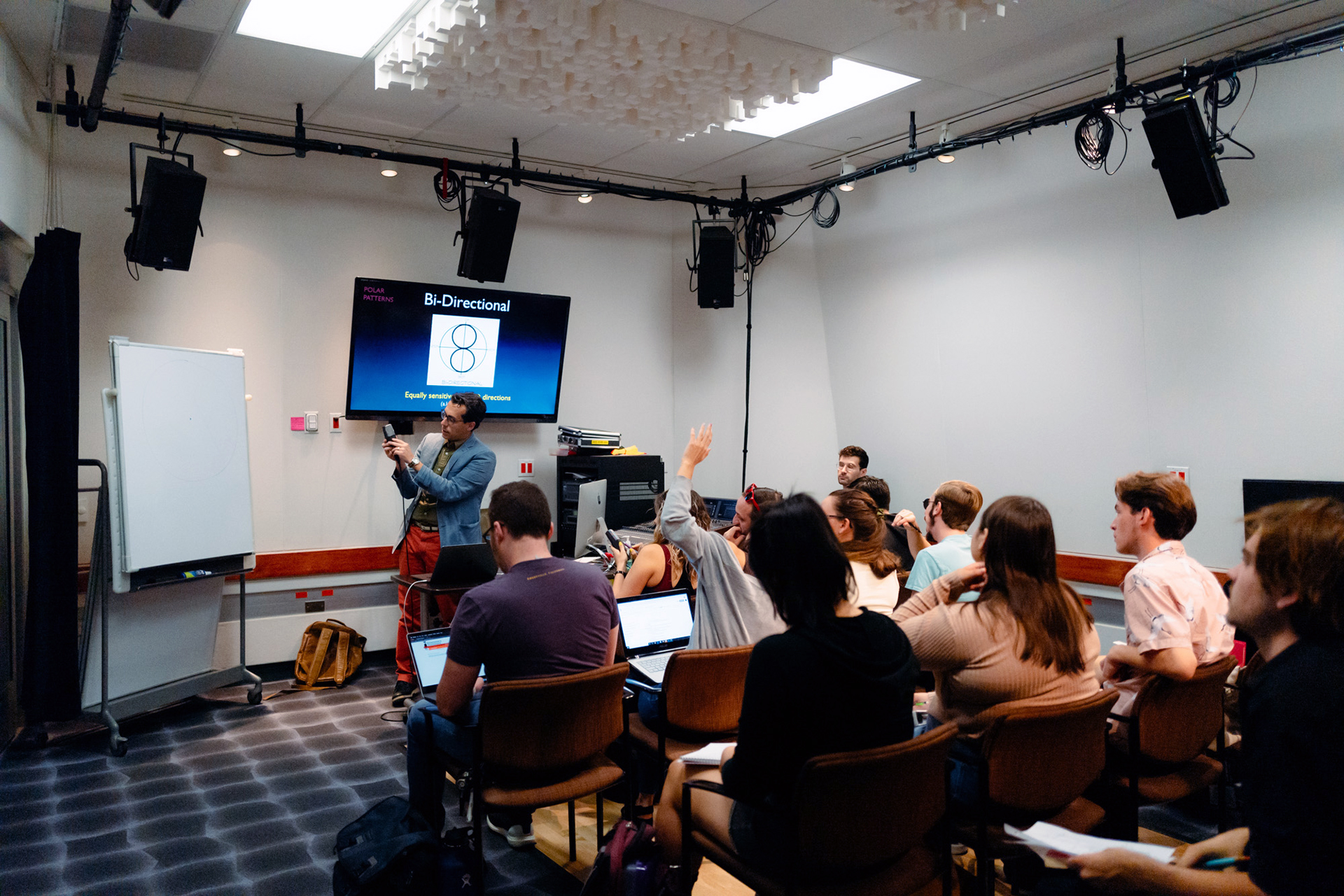
The program typically enrolls two graduate students per year level, with a maximum of four students in residence at one time. During their time at UCI, sound design graduate students typically design four to six or more fully supported productions and often contribute to additional workshop, experimental and non-Drama productions across the school and campus.
Students interested in musical theater sound follow a sequence of increasing responsibility, moving from production sound engineer to assistant designer and then to sound designer. UCI also offers undergraduate sound design courses within the B.A. program, and graduate students often help mentor undergraduates through coursework and student-produced projects. There may also be opportunities for graduate students to teach a section of an undergraduate sound design course.
Each fully supported sound design project at UCI is reviewed by sound design faculty and students, creating an ongoing critical dialogue and giving designers the opportunity to discuss creative challenges and ideas in a real-world setting.
Who We Are Looking For
There is no single profile for a UCI sound design student. Students come from a wide range of backgrounds, and we believe that breadth of theatrical experience can be just as valuable as depth of experience in sound design. Some students come from music, composition, recording technology, musical theater, media production or sound art. Some enter directly from undergraduate study, while others do not. Some specialized in sound design as undergraduates, and others discovered the field through broader theatrical training. That range of experience contributes to a dynamic and collaborative creative environment.
Because applicants come from varied educational and professional backgrounds, and because access to mentorship and resources differs widely, we evaluate applicants with care and context. We look not only at prior accomplishments, but at each applicant’s potential for growth and success within the program.
Admission is competitive, with only two students accepted each year. Even so, we do not require applicants to come from programs specifically focused on sound design. Instead, we look for students with a working knowledge of technical theater and a broad theatrical education, which may include history, acting, directing, design, criticism or education.
Most importantly, we seek students with a strong passion for sound.
While awards and scholarships are not guaranteed, the following reflects the typical support package for sound design graduate students:
- Tuition waiver in Year 1 for California residents and nonresidents
- Tuition waiver in Years 2 and 3, with California residency established during Year 1
- Guaranteed acceptance into campus graduate housing
- Paid teaching assistantship supporting production sound, management of the sound design studios and, in some cases, teaching
- Partial health care benefits through the teaching assistantship
For more detailed information about graduate housing, visit the campus housing website. For a fuller view of the value of the M.F.A., refer to the chart for the 2025-26 admission cycle.
The sound design curriculum at UC Irvine is distinctive among graduate training programs in the field. Each cohort moves through a sequence of courses together, complemented by a three-year rotation of studio courses in Drama 255 and Drama 280, Graduate Design. The 255/280 sequence continues to evolve alongside changes in technology and artistic practice in the industry and is designed to provide applied, real-world skills.
Core M.F.A. Sound Courses
Drama 266: Digital Audio Systems
Comprehensive study of digital audio, including hard-disk recording, editing, data compression and Ethernet audio distribution. The course emphasizes understanding the recording, editing and delivery of audio as used by the sound designer in the digital domain.
Drama 267: Creating Sounds From Scratch
Study of how to analyze sounds for their core timbral components and use that information to create new sounds, from realistic to fantastic, through digital manipulation.
Drama 271: Conceptual Sound Design
An intensive, project-based seminar exploring relationships between sound and image. Topics may include synesthesia, creative intent versus audience perception, and sound and movement. A series of creative projects is assigned and critiqued through peer review. This course complements Drama 279, which examines relationships between sound and text.
Drama 272: Musical Theater Sound/Concert Sound
A concept-to-opening study of the process of designing sound systems for musicals and live or touring sound. Special attention is given to the paperwork and documentation required to package, build and mix these productions.
Drama 277: Critical Listening
Exploration of the many variables that affect the audio chain. Understanding these parameters helps students control sound systems and shape cues with intention. The course also includes equalization and alignment of sound systems, as well as audio mastering.
Drama 279: Advanced Sound Design
An in-depth investigation of sound design for theater. Special emphasis is placed on text analysis, design concept, content creation, content delivery and design organization. Class projects include developing paper designs and production paperwork for a range of texts.
M.F.A. Sound Design Studio Courses (Current Rotation)
Drama 255: Trends in Modern Sound Design (offered each fall quarter)
A seminar focused on current trends, ideas, issues, processes and technologies in contemporary sound design. Ideas are further explored in the sound lab or studio. Student-generated topics are encouraged.
Drama 255: Sound for Themed Entertainment
A course that applies theater sound design skills to themed entertainment environments, including theme parks, museums, industrial productions and commercial sound design.
Drama 255: Recording Engineering and Production
A practical exploration of the recording chain across multiple disciplines. Particular emphasis is placed on the skills needed by an engineer or producer in the creation of sound and music for theater. Students create recordings ranging from simple location sound to multitrack recording, overdubbing and mixing.
Drama 255: Sound for Other Media
An overview of sound in dance, performance art, sound art and installations, film, video, internet-based work and gaming.
Drama 255: Thesis Writing
Research, organization, writing, presentation and juried critique are explored to guide the graduating sound designer in the creation of a successful master’s thesis.
Drama 280D: Postproduction Sound
This course examines the postproduction audio process as used in the film, television and themed entertainment industries. The course culminates in a final project in which the audio from a commercial film clip is removed and all three stem elements are recreated, replaced and mixed.
Drama 280D: Techniques in New Media
An introduction to theory and practice at the intersection of filmmaking and stagecraft. This course focuses on new media in live performance and is hosted by the sound area while remaining open to all design disciplines.
Drama 280D: Responsive Composition
Composing for theater and dance.
Drama 280D: Psychoacoustics
Drama 280D: Sound Design for Video Games
M.F.A. Design Courses
Drama 251: Foundations
Explores the roots and styles of theater, art, architecture, fashion and music, as well as theories of performance and aesthetics. Developed for incoming M.F.A. design students, this yearlong, three-quarter sequence establishes a common lexicon of terminology, ideas, genres, styles and artistic practitioners.
Drama 259: Colloquium
A forum for guest speakers and topics of interest to all design students.
Drama 256: Survival and Professional Practice
Discussion of the business skills needed to work as a designer, including copyright and entertainment law, contracts, fees, unions and small business development. Career opportunities, self-promotion and networking are also explored.
Drama 282: Automation, Show Control and Electronics
An applied seminar in using computers and dedicated hardware to cue, control and automate sound and lighting for live performance. Basic electronic principles and current control protocols are also examined.
Design and Production
Drama 199: Projects in Theater (repeated as needed)
Provides credit for independent study and limited-series courses.
Drama 240: Graduate Projects (repeated as needed)
Provides mentored and graded credit for design and production work on Drama productions.
M.F.A. Drama Courses
Drama 220: Seminar in Dramatic Literature
Drama 221: Seminar in Criticism
Drama 248ABC: History of American Musical Theater
Undergraduate Sound Courses
Drama 50D: Introduction to Sound Design (offered every quarter)
Provides a broad introduction to the art and craft of theatrical sound design. Half of the course focuses on sound technology and half on the creative aspects of design.
Drama 179/279: Intermediate Sound Design
A project-based study of sound design in the theater and of the design principles that shape audience experience.
Drama 11: The Rock and Roll Spectacle Show
An overview of the development and cultural significance of the rock ’n’ roll spectacle show. The course focuses on the historical and contemporary development of the form, aesthetic trends in the field and a variety of subgenres. This is a general elective taught by the sound area.
If you are interested in applying, we encourage you to begin the conversation early. For more information, please contact Professor Olivieri or Professor Hooker.
How to Apply
Applications may be submitted online through UC Irvine or through the U/RTA review process. If you believe UCI may be a strong fit for your graduate studies, we encourage you to apply directly through the Drama Department website. You may also apply through the Graduate Division application website.
To apply to the M.F.A. program, applicants must submit a completed application and application fee. The fee is $120 for domestic applicants and $140 for international applicants. Fee waivers may be available based on financial need, veteran status or other qualifying circumstances. All graduate applications are submitted electronically and must include appropriate academic transcripts and three letters of recommendation, which should also be submitted online.
If you choose a U/RTA interview, contact U/RTA directly at 212-221-1130 or info@urta.com, or visit urta.com. Please note that UCI does not recruit through U/RTA every year.
For sound design applicants, the GRE is not required. After we receive your completed application and fee, we will contact you regarding the location and time of your interview. If you move after submitting your application, it is essential that you notify our office of your new address and phone number.
The deadline to submit a completed application, including transcripts and letters of recommendation, is March 10. We encourage applicants to apply as early as possible in order to secure an interview date. If you have not heard from us within three weeks of submitting your application, please contact the Drama office.
Please note that applicants with a cumulative GPA below 3.0 are not eligible for consideration.
When to Apply
Applications open Oct. 15, though recruitment typically begins in December. The application deadline is March 10, but applicants are encouraged not to wait until the deadline. Selections are typically made concurrently with the U/RTA offer and acceptance period.
Applicants who interview through U/RTA must still complete the UCI application in order to be considered for admission. Students may both apply directly and interview through U/RTA.
Your Portfolio
All applicants to the UCI sound design program must submit a portfolio as part of the application and interview process. Sound design portfolios are dynamic documents, and unlike visual design portfolios, there is no single standard for portfolio content. Applicants are encouraged to determine the most creative, engaging and effective way to present themselves as sound designers and artists.
Portfolios should include sound examples from design work, discussion of creative and analytical process, and examples of organization and production paperwork. The portfolio should be self-guided. Online portfolios are especially common for sound designers because they can bring together sound, music, photographs and video in one format.
Visiting
Visiting the UCI sound design program is strongly encouraged as part of the application and interview process. With advance notice, prospective students may be able to sit in on classes, attend rehearsals or productions, and meet faculty and students. For more information, contact Professor Hooker or Professor Olivieri.
Visitors may also arrange a campus tour through the UCI Office of Campus Tours. Although these tours are designed primarily for prospective undergraduate students, they offer a helpful introduction to the campus. In most cases, a visit is expected unless travel presents a significant hardship, including international travel costs.
Application Checklist
Applicants are responsible for making sure the following materials are received on time. Do not assume that requests for letters or transcripts have been completed without confirmation.
- Three letters of recommendation
- Copies of all undergraduate and community college transcripts; unofficial copies are acceptable until an offer of admission is made
- Personal statement, as outlined on the application website
- Your portfolio or a link to your online portfolio website; no action will be taken on the application until this is received
- Application fee
If you have not heard back within three weeks of applying, we recommend sending a follow-up email. If you interview through U/RTA and remain interested in UCI, you should apply shortly after your interview. UCI will not make U/RTA offers unless the application process is fully complete. U/RTA does not waive the UCI application fee.
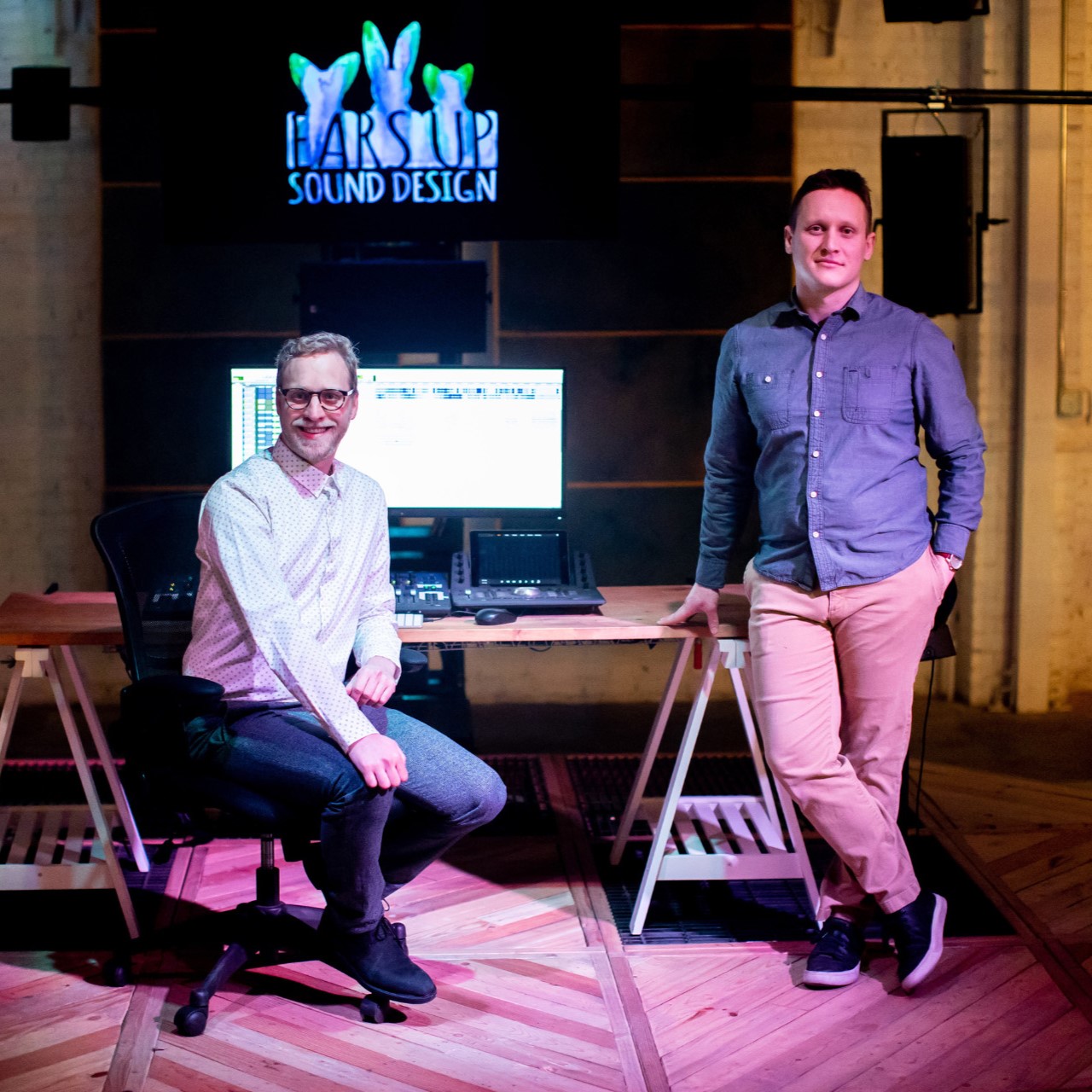
Professor of Sound Design
The Meyer Sound Design Studio
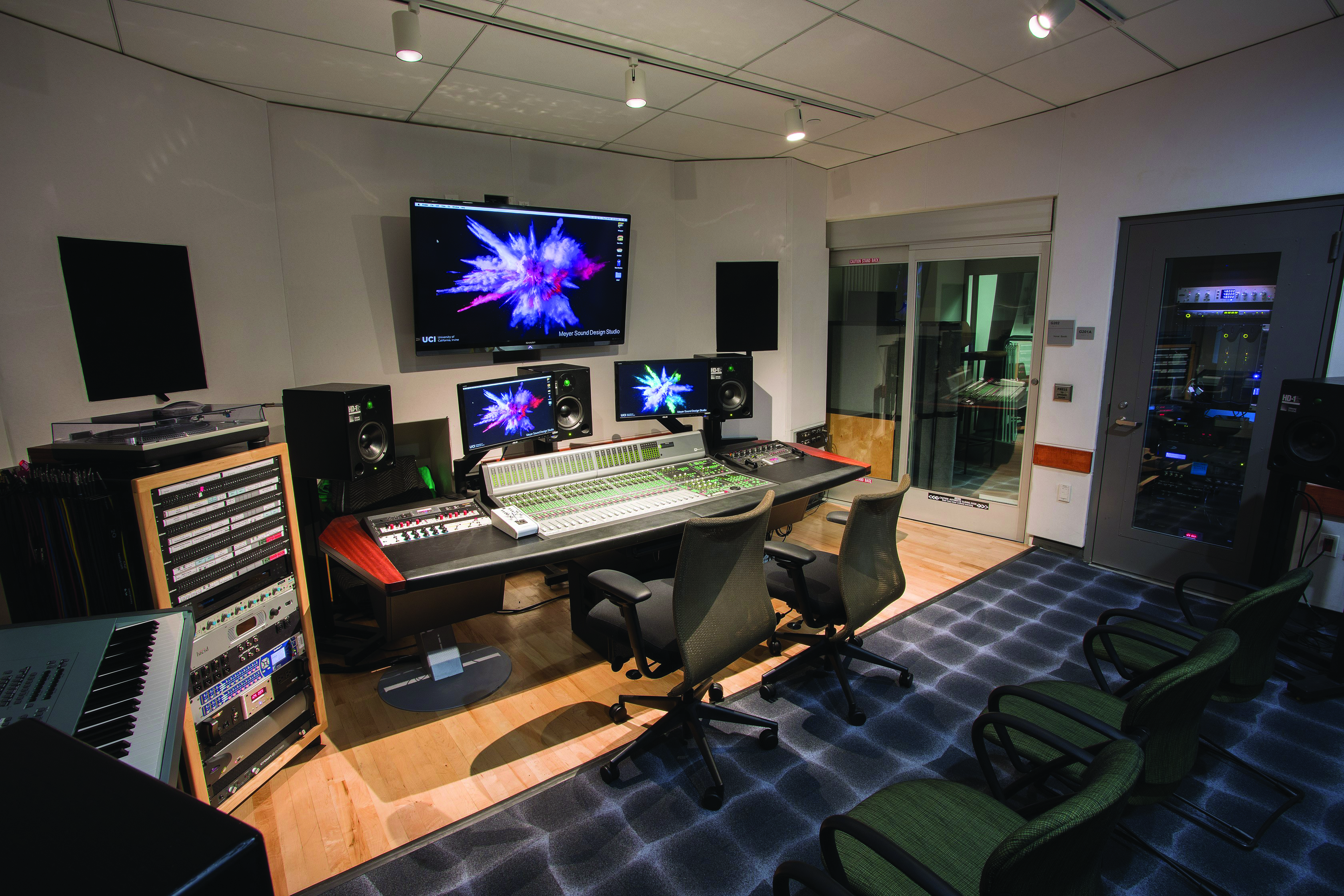
The Meyer Sound Design Studio is a dedicated facility designed to support advanced work in sound design. The studio includes a standard 5.1 control room, an isolation booth, a separate offline sound design and editing suite, and a large studio and technology space with a pipe grid. All rooms are interconnected using current digital media systems.
The studio is named in honor of John and Helen Meyer of Meyer Sound Laboratories Inc., a longstanding supporter of the UCI sound design program and of sound education worldwide. Meyer Sound is an industry leader in sound technology and loudspeaker design.
The facility is equipped exclusively with Meyer Sound Studio Series and Ultra Series loudspeakers, along with DMitri and Galileo processing systems. The studio was designed to provide UCI sound designers with access to high-level professional tools that support both technical development and creative exploration.
All sound design graduate students have 24/7 access to the studio when it is not in use for scheduled classes.
For more information about Meyer Sound Laboratories, visit meyersound.com.
The Sound Studio
MM115 is a fully renovated, multi-channel immersive sound design studio serving as a secondary design lab for the Sound Design program. The space is shared in collaboration with the ICIT program in the Department of Music and supports advanced creative and technical work across disciplines.
The studio is built around a Pro Tools HD system with an ICON D-Command control surface and includes industry-standard plug-ins, sequencing tools, recording capabilities, video integration, and virtual instrument software. Monitoring is supported through a custom-configurable surround system, designed for 5.1 and expandable beyond 7.1 into more complex immersive audio configurations.
The room features an asymmetrical architectural design and is acoustically tuned to create a semi-live, diffuse environment free from flutter echo, resonance, and unwanted reflections. Custom air handling systems and acoustic isolation elements prevent sound transfer in and out of the space, providing an optimal mixing environment.
The studio includes dual 52-inch 1080p LCD monitors and an LCD projector, all connected through a centralized switching system for flexible visual workflows. A built-in voice-over booth supports recording needs within the same space.
Originally developed as a voice and speech laboratory for the graduate acting program, MM115 was repurposed in 2006 to support the Sound Design program and has since evolved into a specialized facility for immersive audio production and research.
Studio Development
The development of MM115 was made possible through the collaboration of faculty, designers, and industry professionals:
- Studio and Acoustic Design: Michael Hooker
- Wiring and Infrastructure Consulting: Samuel Buckner (Technical Multimedia Design), Dave Revel (CEO)
- Wiring Infrastructure and Patchbay Construction: Dave Luther, Lex Products (Sun Valley, CA)
- Custom Furniture: KK Audio, Kurt Koesler (North Hollywood, CA)
- Color Consultant: Jeanine Nichols, M.F.A. Scenic Design, UC Irvine
- Installation: Palmer Jankens, Joe Wilbur, Corinne Carrillo, Scott Collins
- Primary Equipment Dealer: RSPE Audio Solutions (Universal City, CA), Dave Szpak
The Gear List
The sound design program is well equipped, with the understanding that equipment serves as a tool for the creation and execution of sound design. While production technology continues to evolve, the program maintains a wide range of professional equipment to support both learning and production work.
Mixing Consoles
- Allen & Heath S7000 dLive with Waves SoundGrid server and plugins
- Avid VENUE D-Show with sidecar, two stage boxes, PQ mixer and Waves Live plugins
- DiGiCo SD9 48x24 with 40x24 analog, 2x2 AES and 48x48 MADI
- Behringer X32 Rack
- Yamaha LS9-32
- Two Yamaha 01V96
- Innovason SY44 32x16
- Yamaha MX400
- Yamaha GA24/12
- Yamaha MG12/4
- Allen & Heath GL3000 32x8x8
- Crest X-Rack XRM
- Tascam M-2600
- Soundcraft Spirit E8
Playback and Computers
- Meyer DMitri 8x16 and Wild Tracks
- Two frames of Meyer Matrix3 LCS with Wild Tracks and VRAS, totaling 16x32
- 15-inch MacBook Pro with QLab, MOTU Traveler, Pro Tools and Mbox2 Mini
- Two 13-inch MacBook systems with QLab, Pro Tools and Mbox2 Pro
- Two Mac Mini systems with QLab Pro Audio
- One iMac with QLab Pro Audio
- Two custom-built SFX PCs with SFX software
Measurement Systems
- Meyer SIM3 system with DPA/SIM microphones and switching systems
- Smaart v8 with Earthworks M50 microphones
- IVIE IE35 analyzer
- NTI Minirator Pro
- Audio Control Industrial SA-3050 real-time analyzer
Loudspeakers and Amplification
- Meyer Sound systems including M1D, UPQ-1P, UPM-1P, UPJ-1P, UP-4XP and others
- Meyer subwoofers including M1D-Sub, UMS-SM and 500HP
- Meyer stage monitors including MJF-212A and UM1-P
- d&b audiotechnik loudspeakers including Q1, Q7, Q10 and Q-Sub systems
- d&b audiotechnik D12 and D6 amplifiers
- Additional systems from Apogee, Sennheiser, JBL, QSC, Ramsa, Renkus-Heinz and EAW
- Additional loudspeakers from Yamaha, TOA, FBT and JBL
- Additional amplifiers from Crown, QSC, Yamaha and BGW
Microphones
- Shure UHF-R wireless systems with multiple transmitters
- DPA 4061 and DPA 4060 microphone systems
- Sennheiser MKE-2 microphone elements
- Countryman E6 and B3 microphone systems
- Shure PSM-900 in-ear monitoring systems
- Additional studio microphones available for production use
Additional Permanent Equipment in the xMPL Theatre
- Tascam CD player with iPod dock
- Antelope Isochrone word clock
- Crown CTS-8200 eight-channel power amplifier
- Roland Octa-Capture 8x8 interface
- Yamaha 02R 40x32 console
Outboard Equipment
- RME Fireface 800
- Focusrite Liquid Saffire 56
- Roland Octa-Capture 8x8 interface
- Eventide H8000FW multichannel effects system
- Meyer Galileo loudspeaker management systems
- dbx DriveRack PA
- Presonus Digimax FS preamps
- True Systems Precision 8 preamp
- Yamaha SPX-90 processors
- Yamaha REV500 reverb
- Alesis QuadraVerb
- DigiTech TSR-24S effects processor
- Ashly Protea EQ systems
- Additional EQs, compressors, delays and crossovers
- CD, MD, DAT, cassette, DVD and reel-to-reel playback systems
- 360 Systems Short-Cut units
Miscellaneous
- Meyer RMS interface system
- d&b audiotechnik ROPE interface
- Alcorn McBride digital audio machines with GPS
- BSS Soundweb London system
- Clear-Com wired and HME wireless intercom systems
- KVM extenders
- Blackmagic Design HDMI and SDI converters
- CM Lodestar chain motors
- Total Structures box truss
- Genie ST-20 towers
- Rigging hardware
- Custom three-phase power distribution
Sound Effects Libraries
- Sound Ideas General 6000 Series and extensions
- Sound Ideas 7000 and 10000 Series ambience libraries
- Sound Ideas 20th Century Fox and Blow Tools collections
- Amadeus
- Saul Zaentz Film Center collection
- Basic Asia
- Hollywood Edge collections including Premier Edition, Citi Trax and Historical Series
- Hollywood Edge Mechanical Morphs
- Immersion Stereo FX Library
- Turner Entertainment
- Universal Studios FX
- BBC sound libraries
Studio Equipment
Meyer Sound Design Studio: Control Room
- Mac Pro (8-core Intel Xeon, 32 GB RAM, 1 TB SSD)
- Avid Pro Tools Ultimate
- Avid D-Command ES with 24 faders
- Two Avid HD I/O interfaces
- Avid SYNC HD and XMON
- Avid PRE 8-channel preamp
- JLCooper surround panner
- RME Fireface UFX
- Yamaha MO8 keyboard workstation
Software and Plugins
- Waves Mercury bundle
- iZotope RX
- Altiverb
- Serato Pitch ’n Time
- Antares Auto-Tune
- Zynaptiq Unveil
- Apple Logic Pro
- MOTU Digital Performer
- Max/MSP
- QLab
- Sibelius
- Final Cut Pro
- Synthogy Ivory
- Native Instruments Komplete
- Garritan Personal Orchestra and Jazz and Big Band
- MOTU Ethno and Symphonic Instrument
Studio Monitors
- Five Meyer HD-1 reference monitors
- Meyer UMS-1P subwoofer
- Meyer Galileo 616 for bass management and EQ
Racked Equipment
- Millennia HV-3D 8-channel preamp
- Summit DCL200 compressor/limiter
- Summit FeQ50 tube EQ
- Isochrone Trinity master clock
- Furman headphone and monitor amplifier system
- Aphex line-leveling amplifiers
- Crown D-75A amplifier
- MOTU MIDI Express interface
- Lucid 8x8 AD/DA converter
- Z-Systems digital audio router
- Oppo Blu-ray/SACD/DVD-A player
- Bittree patch bays for audio, video and timecode
Video Equipment
- Gefen HDMI crosspoint switcher
- Sharp 60-inch LCD display
- Atlona and Gefen HDMI extenders
- Gefen VGA-to-HDMI scaler
Meyer Sound Design Studio: Lab
- iMac system with Pro Tools and Waves bundle
- Roland Octa-Capture interface
- Yamaha 02R/96 digital mixing console
iMac Workstations
- Three iMac workstations with QLab, Pro Tools and Max
- Akai MPK-25 USB keyboard controllers
Meyer Sound Design Studio: Edit Suite
- Mac Pro system with Avid Omni HD interface
- Pro Tools with Waves bundle
- Two Meyer HD-1 monitors
- Akai MPK-88 keyboard controller
MM115 Studio
- Mac Pro system with Pro Tools HD and Waves Mercury bundle
- Avid D-Command with 24 faders
- Digidesign HD interfaces and SYNC HD
- JLCooper surround panner
- MOTU 828mkII and Canopus video interface
- Software including Digital Performer, Ableton Live, Logic Pro, Max and QLab
- Extensive software instrument library
- Final Cut Pro
Studio Monitors
- ADAM S3A monitors
- JBL 5.1-capable monitor system with subwoofer
Racked Equipment
- Millennia HV-3C preamp
- Avalon compressor/limiter
- Drawmer tube EQ
- Apogee Big Ben
- Tascam master recorder
- Furman headphone systems
- Aphex and Crown amplification
- Integrated patch bays
iMac Workstations
- Pro Tools M-Powered systems
- Software including Reason, Peak Pro, Max/MSP, QLab and SFX
- M-Audio keyboard controllers
Additional Audio Equipment
- Yamaha Motif keyboard
- Toft Audio analog console
- Mackie Onyx mixer
- JazzMutant Lemur control surface
- Radial direct boxes
- Vocal booth isolation room
- Portable recorders and headphones
- Recording snake and rigging accessories
Additional Equipment
- Wall-mounted LCD displays and projector systems
- Whiteboard capture system
- HD camcorder and tripod
- External hard drives for checkout
Microphones (Shared Across Studios)
- AKG, Audio-Technica, Audix and Beyerdynamic microphones
- Blue, Countryman and Crown microphone systems
- DPA and Earthworks microphone systems
- Neumann and Sennheiser microphones
- Shure microphones and stereo systems
- SoundField surround microphone system
- Direct boxes from Radial, Whirlwind, BSS and others