Look at Art. Meet Artists. Make Art.
 Share
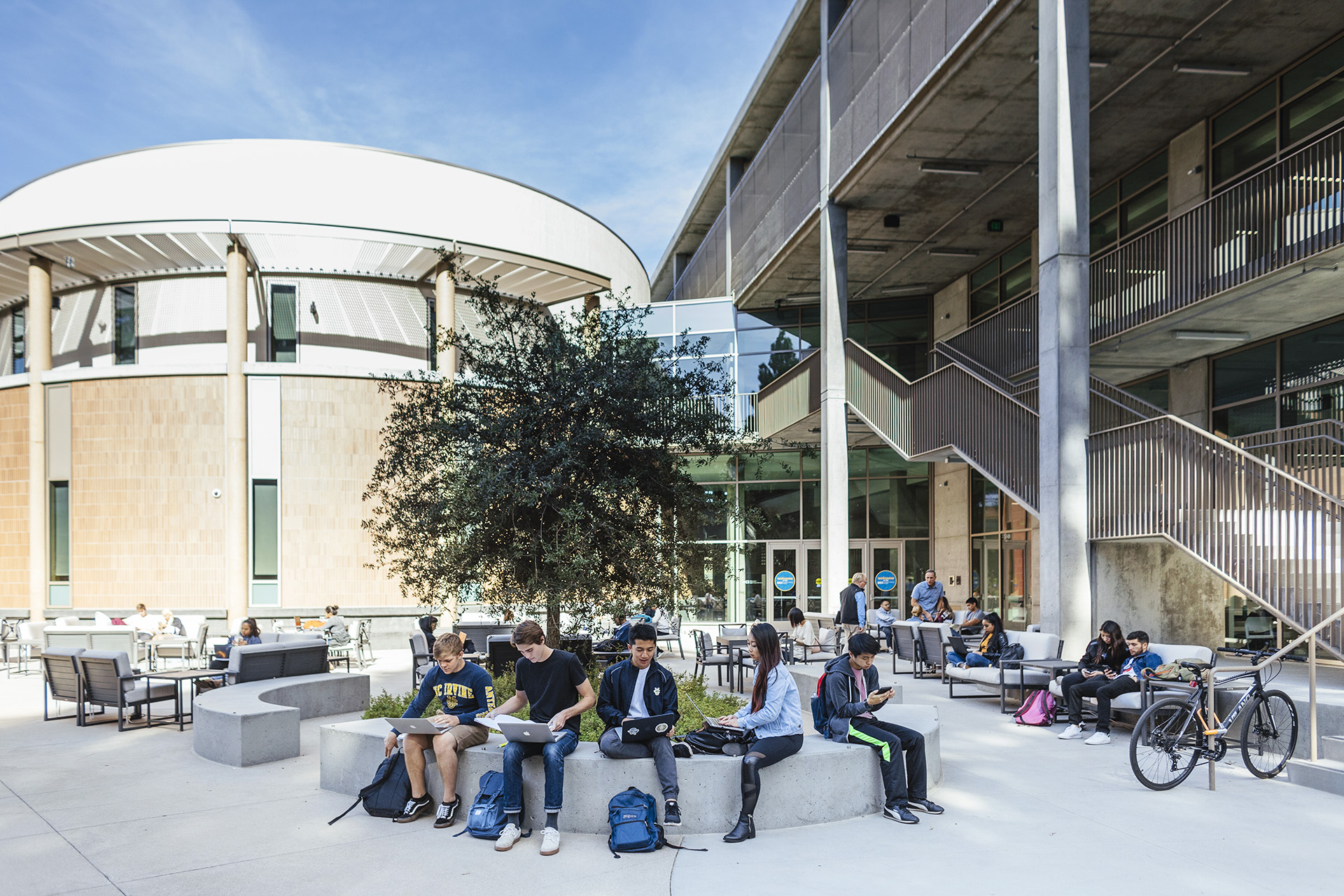
Classes will take place in the Anteater Learning Pavilion (ALP) and the Beall Center for Art + Technology. Photo by Elena Zhukova.
Reimagined Arts 1 course invites UC Irvine students from every discipline to explore creativity, connect with working artists and discover the role of the arts in contemporary life.
What does it mean to be creative? How do artists help us understand the world around us? And what happens when students step outside their academic disciplines to experience the arts in new ways?
These are some of the questions at the heart of Arts 1, also known as ArtsCore, a reimagined general education course offered by the UC Irvine Claire Trevor School of the Arts in winter 2027. Led by professors Jesse Colin Jackson of the Department of Art and Alan Terricciano of the Department of Dance, the course invites students from across campus to explore the intersections of art, technology and contemporary life through creative experiences, conversations with working artists and opportunities to make art themselves.
With a simple invitation — Look at art. Meet artists. Make art. — the course is designed for students of all majors, backgrounds and artistic abilities. No previous experience is required, just a willingness to engage, experiment and be curious.
For Terricciano, who previously taught an earlier version of Arts 1 more than two decades ago, the course represents an opportunity to reconnect students with something essential to the human experience.
"I think that the arts are a human activity, and we, because of technologies, tend to distinguish ourselves between being an art maker and an art consumer," said Terricciano. "That's a loss to humanity, and it's a loss to ourselves if we don't include art making in our regular lives."
That belief is central to the course's renewed approach: Art is not simply something to study or appreciate, but something everyone can experience and create.
Rediscovering the creative instinct
For many college students, creativity was once a regular part of everyday life. They played instruments, participated in theater, drew, danced or explored other artistic interests before their academic and professional paths took them in different directions.
Jackson sees Arts 1 as an opportunity for students to reconnect with those experiences, particularly those pursuing fields outside the arts.
"I find that most students at UCI had a creative outlet as a teenager," Jackson said. "They played music, they did art, and we want to give them an opportunity to engage with that part of their brain again, particularly if they're pre-med or engineers, and they don't feel like they have time."
Rather than relying exclusively on traditional lectures, the course will emphasize participation and discovery. Students will engage in collaborative projects involving music and visual art, explore creative processes and consider how artistic ideas take shape.
"We don't want them to come and just listen to us talk about art," Jackson said. "We want them to feel like an artist again in the class."
The experience is equally relevant for students already pursuing the arts, offering opportunities to explore creative practices beyond their own disciplines and consider the broader relationships among artistic expression, culture and society.
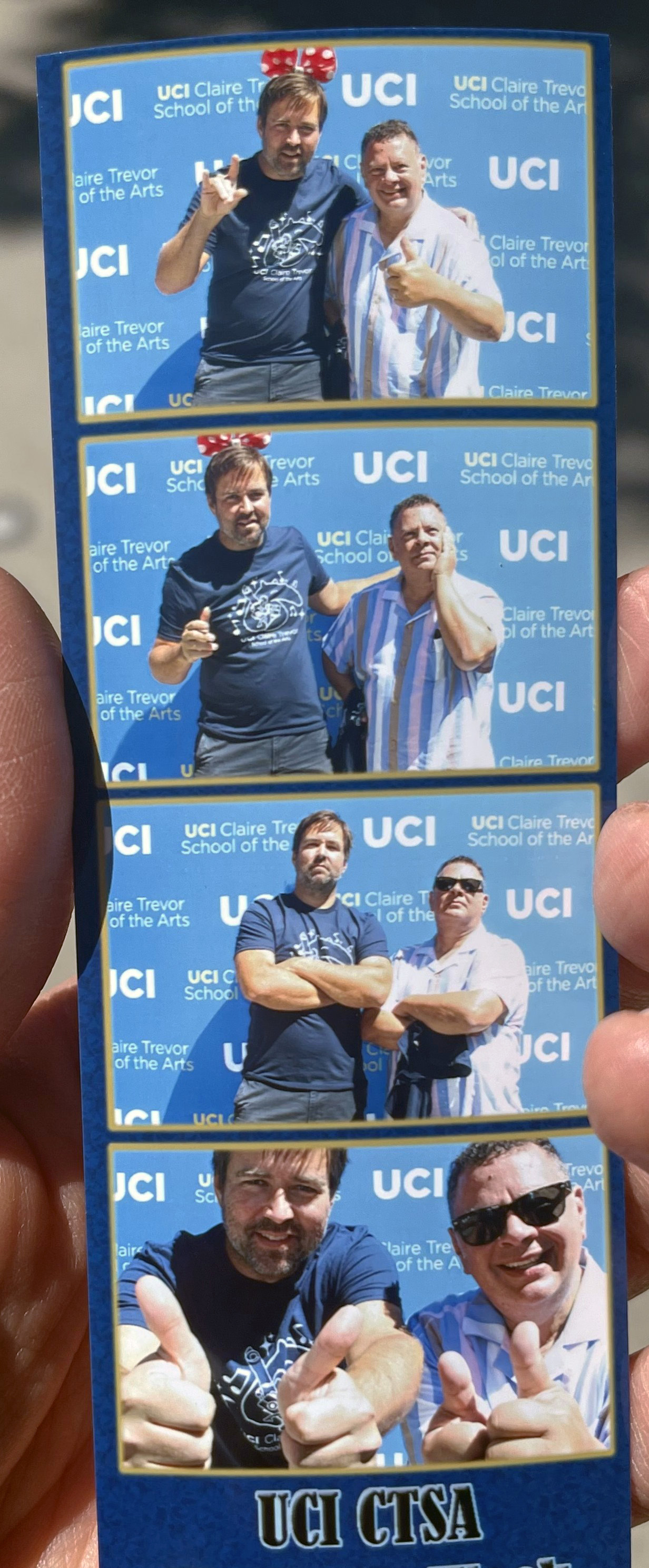
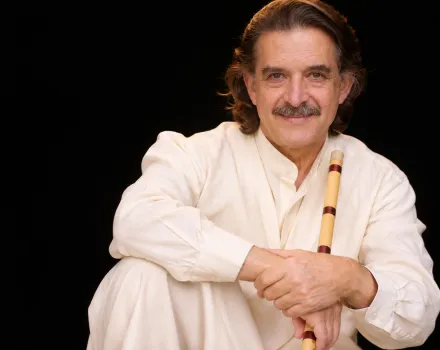
Pictured: Jesse Colin Jackson (left) and Alan Terricciano
Connecting art to the world around us
Throughout the quarter, Arts 1 will examine how artists engage with some of the most pressing questions of contemporary life, from ecology and activism to emerging technologies and artificial intelligence.
The course brings together the complementary expertise of Terricciano, whose work spans music, composition and performance, and Jackson, a visual artist whose practice engages with contemporary art and technology.
Together, they will introduce students to a broad range of artistic approaches while demonstrating how creativity connects disciplines that may initially seem far apart.
The Donald R. and Joan F. Beall Center for Art + Technology will play an important role in bringing these ideas to life. Students will visit exhibitions, encounter works by contemporary artists and participate in a series of guest presentations featuring artists and curators.
The course will also introduce students to contemporary artists, curators and scholars through a series of guest presentations developed in collaboration with the Beall Center. Planned speakers include artists Colleen Hargaden, Ricardo Dominguez and Asma Kazmi, along with former Beall Center artistic director David Familian. Each presentation will be followed by a conversation with an invited expert, offering students opportunities to explore the artists' creative processes, perspectives and approaches to contemporary issues.
Students will also be encouraged to develop their own questions about the work they encounter, learning that meaningful engagement with art begins with observation and curiosity, not necessarily specialized knowledge.
Jackson hopes these experiences will help students move beyond simply deciding whether they like or dislike a work of art.
"Why do you like it? Why do you dislike it? Why are you responding the way you are?" he asked. "What kind of connections can they make between their interests and their lives and the work on display?"
By encouraging students to reflect on their own responses, the course aims to make contemporary art more accessible while showing how artists investigate questions that extend well beyond museums, galleries and performance spaces.
Creativity in a changing world
Another important dimension of Arts 1 is the rapidly evolving relationship between human creativity and technology.
Artificial intelligence, in particular, presents new questions about artistic expression, authorship and the creative process. Rather than treating AI as a separate technical subject, Jackson and Terricciano plan to explore its implications alongside the historical and contemporary technologies that have transformed how art is created, shared and experienced.
Students will consider both the possibilities and challenges of these tools, including questions surrounding intellectual property, artistic originality and the ethical use of AI in creative work.
For Jackson, the conversation is especially timely because the impact of AI on artistic practice is often overlooked in broader discussions about the technology.
"We recognize that dealing with AI is everybody's project right now," Jackson said, emphasizing the importance of exploring both the technical and ethical questions surrounding its use in creative work.
The course will approach these questions through open discussion, experimentation and opportunities for students to consider how emerging technologies may influence their own creative experiences.
Terricciano sees the discussion as part of a larger opportunity to recognize the value of human creativity in an increasingly technology-driven world.
"Human creativity is something that, one, is a positive good, but two, is also translatable to any walk of life," he said.
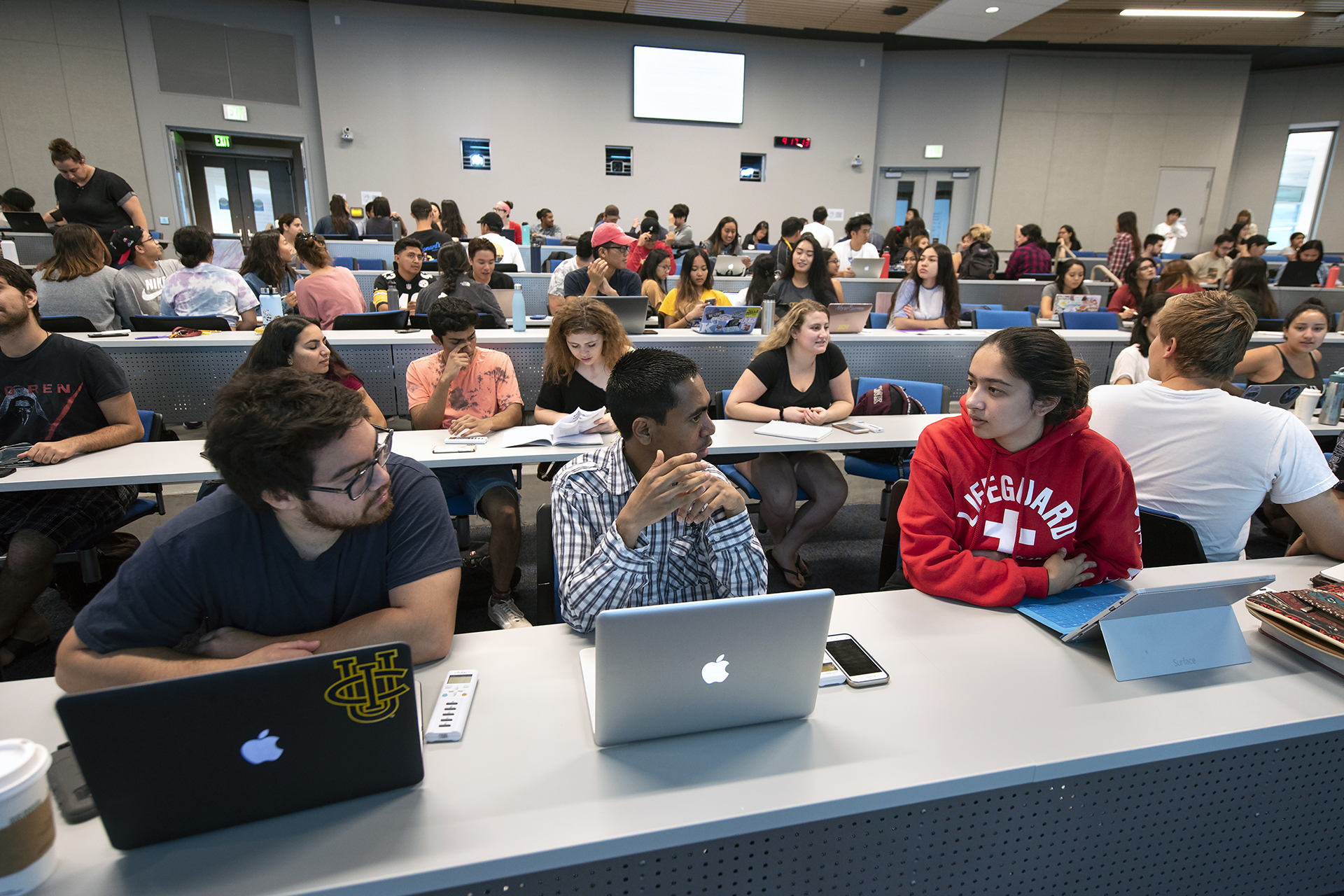
Students in class in the Anteater Learning Pavilion (ALP). Photo by Elena Zhukova.
More than an arts education
Although Arts 1 introduces students to artistic practices, its broader lessons extend into nearly every academic discipline.
Terricciano points to engineering as an example of how artistic thinking and creative problem-solving naturally intersect. Both artists and engineers must approach challenges from multiple perspectives, experiment with possible solutions and make decisions that balance function, expression and design.
But he also suggests that artists do something beyond solving problems: They learn how to identify and define the questions worth exploring.
"They're problem designers," Terricciano explained, describing how the artistic process often begins without a predetermined solution. "You have to design the problem you're going to solve."
This ability to work with uncertainty, explore possibilities and develop original approaches is part of what makes creative experiences valuable, regardless of a student's major or intended profession.
At the same time, the professors are careful not to define the value of art solely through its usefulness to other disciplines. Creativity, they believe, is worth pursuing for its own sake — for the joy of discovery, the opportunity for expression and the new ways it allows us to experience the world.
For students who may feel intimidated by the idea of making art, Terricciano offers a simple reassurance.
"You're not being evaluated on that. You're being evaluated on your curiosity," he said, responding to students who might believe they lack artistic talent. "Just bring your curiosity and don't worry about yourself being evaluated as more or less talented. It's not about that."
Ultimately, Arts 1 is an invitation to see the arts not as something separate from everyday life, but as an essential part of how we think, communicate, question and connect with the world.
And for students who haven't picked up an instrument, made a drawing or explored their creative interests in years, it may be an opportunity to discover something they never really left behind.
You don't have to be an artist to take Arts 1. You just have to show up.
Course information
Arts 1 | Winter Quarter 2027
- Instructors: Jesse Colin Jackson, Department of Art, and Alan Terricciano, Department of Dance
- Schedule: Mondays and Wednesdays, 4:30–6:20 p.m.
- Location: Anteater Learning Pavilion (ALP), Room 1300
- Course code: 01820; Units: 4
- General education: Category IV
- Additional credit: Counts toward the Minor in Digital Arts
Open to students from all disciplines. No previous artistic experience required.