
Ecotechnics Curated by Zachary Korol Gold
 Share
Share
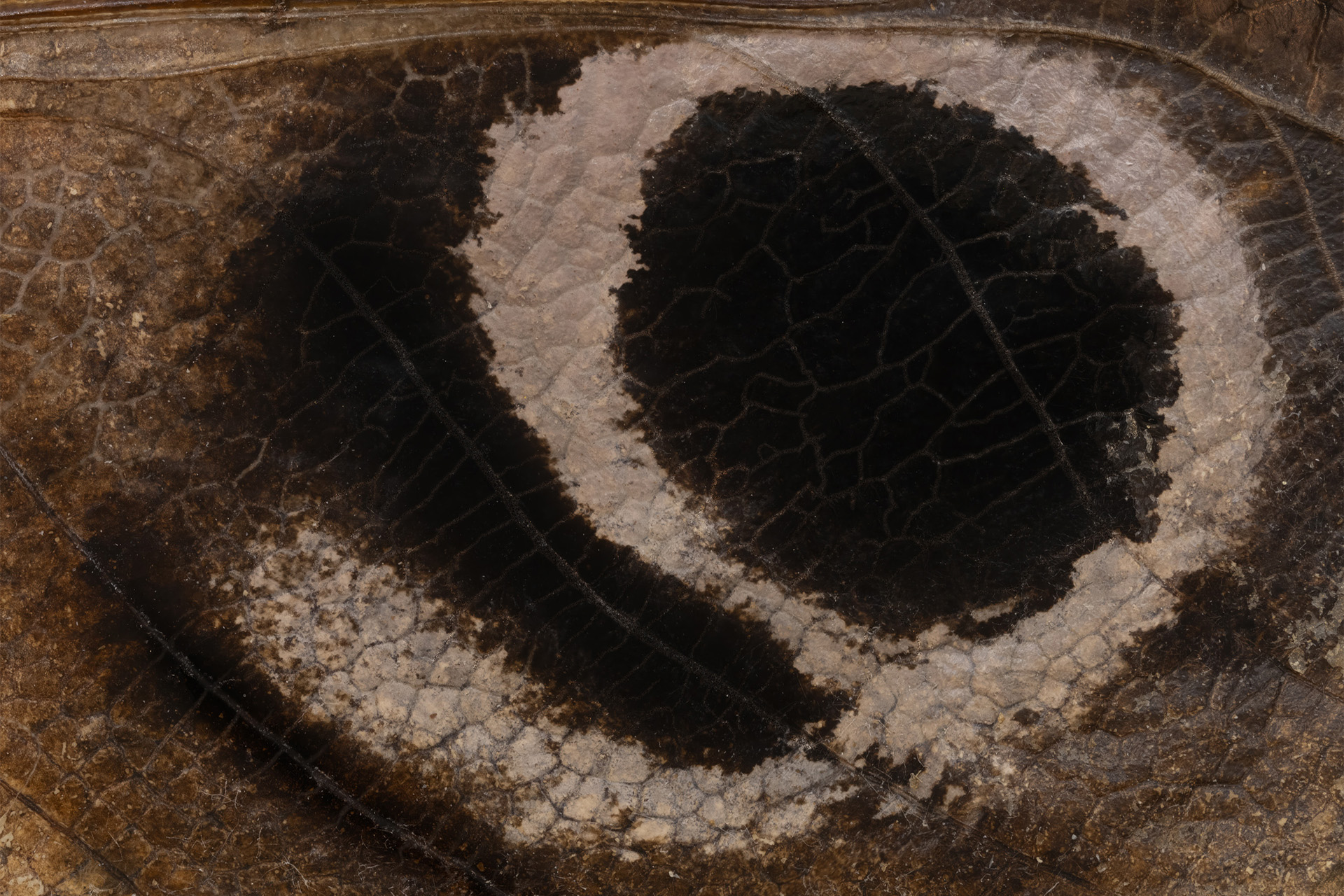
Jeffrey Stuker, Mantis Te Vidit, 2026, 70mm film slide presentation.
On View: October 10, 2026–February 6, 2027
IRVINE, Calif. Sep. 22, 2026 — The Beall Center for Art + Technology at the University of California, Irvine, is pleased to announce the opening of Ecotechnics, curated by Zachary Korol Gold. The exhibition opens on Saturday, October 10, 2026, from 2 to 5 p.m., and will run through Saturday, February 6, 2027.
Ecotechnics gathers contemporary artists who treat ecology not as a given but as a process of imaging. The works here take divergent paths among the technologies, histories and fictions by which environments and organisms are known. In turning the technical images and devices that monitor or measure environments back on themselves, they picture how contemporary society produces an ecological view. The exhibition asks how we, through technology and as technical beings, sense and represent the living world.
The works move between images, bodies, memories and fictions. The hand-rendered wing of a mantis becomes the stage for the play of abstract painting, while a painting vibrates between micro and macro scales. A microscope reveals the image world of kombucha, and the bacteria-yeast colony becomes the screen for its own projected image. Orchid flowers too small to see with the naked eye tangle with microplastic threads.
If these play with making the unseen visible, others address bodies as environments, in which the mechanism of response occurs prior to conscious recognition. A synthetic aroma piques the nose while rejuvenating skin, and ultrasonic speakers reverberate the bodies of museum visitors. Poison ivy, sprouting in the UC Irvine greenhouse, receives psychoanalytic treatment.
Others construct environments as spaces of memory and fiction. In a post-apocalyptic opera, a communard falls in love with an AI secret agent sent to steal energy-generating bacteria. A video traces flowers growing around a home in Altadena, now lost to the fires. A room constructs a seed vault, its architecture bridging survivalist subcultures with nationalist apocalyptic fantasies. Soil, preserved beneath the pavement encasing the Los Angeles River, once again sprouts.
The ambiguous situation in the gallery operates within and beyond sense and recognition. Some elements grow, others degrade, some hang silently, while still others click and loop. The works make the dissolution of nature and technology promised by ecology a problem in form. Taking up technical images and environmental fabulation, they find artifice in nature, nature in artifice. Here, "environment" does not denote a space for activity, but an active, technical process.
The opening reception will take place on Saturday, October 10, from 2 to 5 p.m. The Beall Center offers free admission and is open to the public during the academic year from Tuesday–Saturday, noon–6 p.m.
Ecotechnics is supported by The Beall Family Foundation and the Claire Trevor School of the Arts.
Artists
Ida Badal, Genevieve Belleveau, Lauren Bon, C.B. Evans, Maru García, Jason Gomez, Colleen Hargaden, Tuomas A. Laitinen, Sean Raspet, Jeffrey Stuker
and Diana Thater.
About the Curator
Zachary Korol Gold lives in Los Angeles, where he researches ecological aesthetics and contemporary art. He is Assistant Curator at the Beall Center for Art + Technology, UC Irvine. Recent exhibitions include Against Outer Space, co-curated with Valerie Olson at the Beall; Common Ground: Early 20th-Century Artist Communities in Southern California, co-curated with Ileana De Giuseppe and Dada Wang at the UC Irvine Langson Institute and Museum of California Art, 2025; Maxwell’s Demon at Canary Test, Los Angeles, 2024; and Expanded Ecologies at the Beall, 2023. He recently published “Artifice and Effigy” in Kim Schoen’s artist book A Bouquet, 2025. Forthcoming publications include essays in artist monographs by Tuomas A. Laitinen and Alice Wang. From 2016–2022, he directed the exhibition space Garden with Britte Geijer Gold. In 2015, he received a B.A. in Visual Art from Brown University, and he is currently a Ph.D. Candidate in Visual Studies at UC Irvine, where he is writing his dissertation, Environmental Antagonism: Pierre Huyghe between Nature and Technology.
About the Beall Center for Art + Technology: The Beall Center is an exhibition and research center located at the University of California, Irvine, in the Claire Trevor School of the Arts. Since its opening in 2000, the Beall Center has promoted new forms of creation and expression by building innovative scholarly relationships and community collaborations among artists, scientists, and technologists and by encouraging research and development of art forms that can affect the future. For artists, the Beall Center serves as a proving ground – a place between the artist’s studio and the art museum – and allows them to work with new technologies in their early stages of development. For visitors, the Beall Center serves as a window to the most imaginative and creative visual arts innovations. The curatorial focus is a diverse range of innovative, world-renowned artists, both national and international, who work with experimental and interactive media. The Beall Center received its initial support from the Rockwell Corp. in honor of retired chairman Don Beall and his wife, Joan – the core idea being to merge their lifelong passions of business, engineering, and the arts in one place. Today major support is generously provided by the Beall Family Foundation. For more information, visit beallcenter.uci.edu.
About the Claire Trevor School of the Arts: The UC Irvine Claire Trevor School of the Arts is where scholarly research and creative activity converge. As the only comprehensive arts school in the University of California system, it includes four departments: art, dance, drama and music. The school offers 15 undergraduate and graduate degree programs and two minors that combine rigorous artistic training with a world-class liberal arts education. Named for Academy Award-winning actress Claire Trevor, the school presents more than 200 public performances, exhibitions and lectures each year. Students and faculty engage in studio practice, performance, academic study and interdisciplinary research, often collaborating across campus and within the community. Recognized nationally for its excellence, access and affordability, the school prepares the next generation of creative leaders who shape culture, drive innovation and make a difference in the world. For more information, visit arts.uci.edu.
About the University of California, Irvine: Founded in 1965, UCI is a member of the prestigious Association of American Universities and is ranked among the nation’s top 10 public universities by U.S. News & World Report. The campus has produced five Nobel laureates and is known for its academic achievement, premier research, innovation and anteater mascot. Led by Chancellor Howard Gillman, UCI has more than 36,000 students and offers 224 degree programs. It’s located in one of the world’s safest and most economically vibrant communities and is Orange County’s second-largest employer, contributing $7 billion annually to the local economy and $8 billion statewide. For more on UCI, visit uci.edu.
Media access: Radio programs/stations may, for a fee, use an on-campus ISDN line to interview UCI faculty and experts, subject to availability and university approval. For more UCI news, visit news.uci.edu. Additional resources for journalists may be found at communications.uci.edu/for-journalists.