M.F.A. in Art - Contacts
For questions about application requirements:
stuart@uci.edu
For questions about the admission process:
gradapplicant@uci.edu
For questions about the M.F.A. Program:
Associate Chair for Graduate Studies
Amanda Ross-Ho
arossho@uci.edu
M.F.A. in Art






Overview
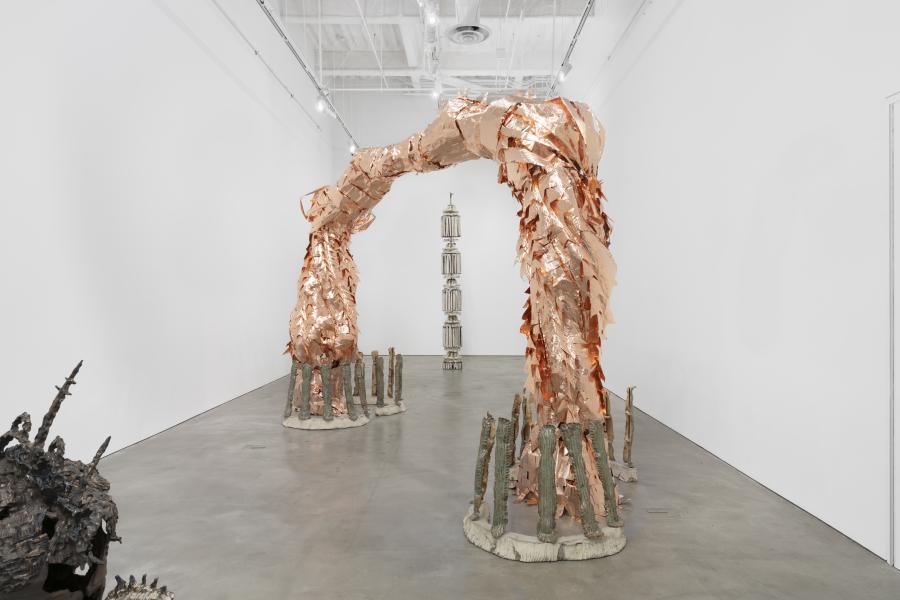
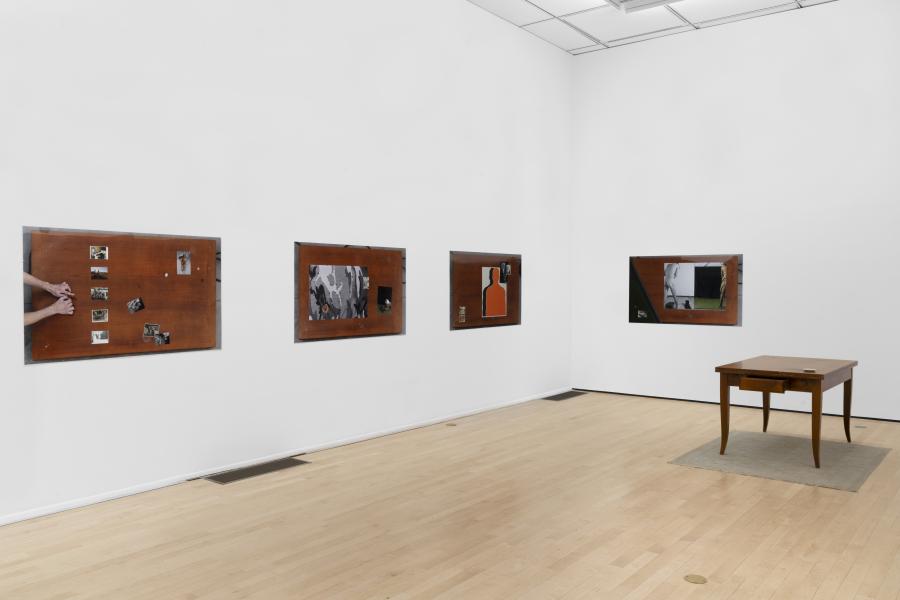
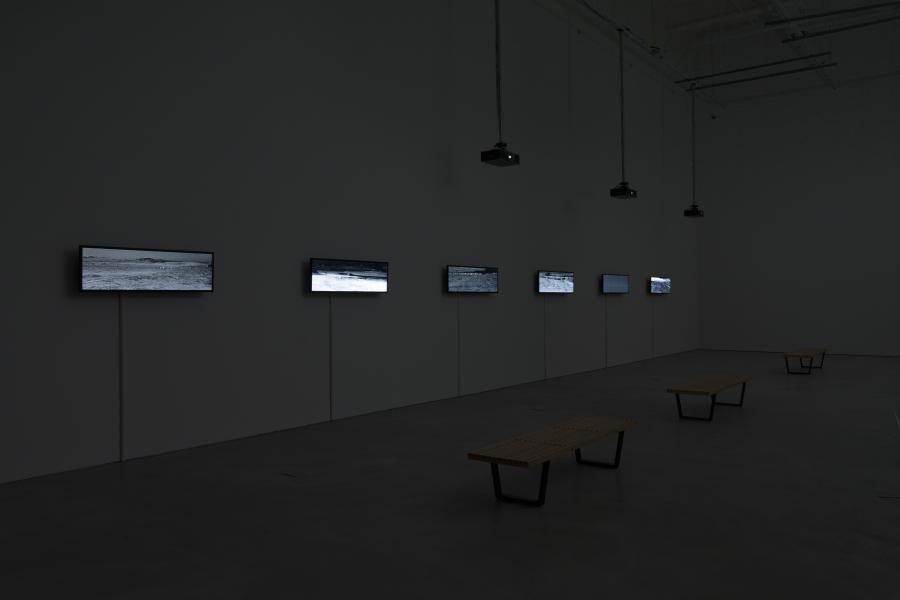
Headed by an internationally distinguished faculty, the Art Graduate Program offers a rigorous, interdisciplinary environment for training in the visual arts. The three-year M.F.A. program comprises a series of core and elective classes in production, theory, and contemporary issues. Graduate students may also take advantage of the academic excellence UC Irvine provides as a leading research university by taking courses in other departments and programs. Through a combination of faculty mentorship, seminars, and regular comprehensive peer critiques, the Department of Art affords an optimal intellectual setting for fostering creative and critical development. In addition to faculty dedicated to facilitating students' understanding of visual art and its cultural contexts, graduate students have access to visiting artists through lectures, studio visits, and colloquia.
Curriculum
The Art M.F.A. program at UC Irvine is designed to provide a thorough and intensive professional training for students wishing to pursue careers in the field of contemporary art. The program emphasizes experimental and interdisciplinary approaches to art making, while also providing a solid grounding in various disciplinary mediums and post-studio practices encompassing painting, drawing, photography, sculpture, ceramics, new genres, installation and performance, digital video, electronic media, critical and curatorial studies. Students undergo a rigorous course of study with independent studio work at the core, combining seminar classes, intensive critique courses, and independent study. The low faculty-student ratio facilitates regular one-on-one instruction with many faculty.
During the first two years, students take courses from a curriculum, totaling a minimum of 12 units each quarter. Beyond that, students can select additional course work from any sector of the department or university, including approved upper-division undergraduate courses. The third year is structured so that students can primarily devote themselves to the production of their thesis exhibition, working intensively with the faculty thesis committee they assemble.
Students may also choose to take elective courses or pursue a second emphasis outside the department. Graduate Emphasis open to Art MFA students are offered in numerous graduate research programs including Visual Studies, Critical Theory, Medical Humanities, Law Society and Culture, and others.
Every year, the department offers several lecture series, where artists, scholars, curators, critics, gallerists, and writers give lectures, engage in conversation, and conduct studio visits. These included the Graduate Colloquium (ART 220), the Visiting Artist Lecture Series (VALS), and the Catalyst Art Lecture Series (CALS). Organized by members of the faculty, the Colloquium invites speakers as part of a class where student engage in in-depth discussions in a rigorous academic setting, accompanied with supplementary readings and studio visits. Organized and run by a graduate student committee, VALS invites a slate of visiting artists and scholars relevant to graduate students' own research and practice to speak, often accompanied by studio visits. Organized by the undergraduate students, CALS coordinate noontime lectures of guests, often current M.F.A. students, to discuss their art practice, providing a mutually supportive link between the graduate and undergraduate student bodies. Together, these lecture series add to the dynamic exchange of ideas and scholarship that occurs inside and outside the classroom.
Financial Packages and Fellowship Opportunities
All graduate students in the Art M.F.A. program receive full funding including tuition and fee remission and Teaching Assistantships for all three years of the program. Students also have opportunities for the numerous grants and fellowships available through the Claire Trevor School of the Arts, the University of California Institute for Research in the Arts, UCI Graduate Division, and other external agencies.
Teaching Opportunities
Each graduate student is appointed to 9 Teaching Assistant and/or Teaching Associate positions during their three years in the program (1 each quarter). Teaching Assistants are assigned to assist in the delivery of instruction under the tutelage and supervision of a faculty member. Some second- and third-year M.F.A.s are also appointed as Graduate Student Researchers, who are tasked with providing lab or office hours to assist students in accomplishing their work in the labs and class assignments. Some graduate students are appointed as Lecturers in the summer. These positions are all salaried appointments.
Exhibition Opportunities
Graduate students have opportunities to exhibit in the University Art Galleries, including their second year group exhibition and solo thesis exhibitions. First-year and second-year M.F.A.s participate in Open Studios and mount exhibitions to evaluate students' progress towards the degree.
Studios, Project and Exhibition Spaces
All M.F.A. students are provided with their own studio space, either in the Contemporary Arts Center (single occupancy studios) or in the ACT Building (shared studios and single occupancy studios). Students also have access to large project and installation spaces by reservation as well as shared workspaces.
Facilities
Facilities include photography laboratories (analog and digital); digital filmmaking and video production studios; sculpture laboratories for work in wood, metal and ceramics; and Mechatronics laboratory to support work in art and technology. There are also facilities to support work in digital media, painting, drawing, performance, new media, and curatorial studies. For more information, please go to Facilities.
Location
UC Irvine is located in the heart of Orange County and forty-five miles south of Los Angeles, where our faculty, students, and alumni are active participants in a rich and multi-layered art community.
Admission
Application Deadline: January 15, 2027
Applicants for admission to the M.F.A. program must meet the general requirements for admission to graduate study, hold a Bachelor's degree, and have completed one year of Twentieth-Century Art History (students who have not completed this will be required to do so as part of their graduate studies). In addition, a portfolio of creative work must be submitted by the application deadline.
M.F.A. Requirements (Effective Fall 2026)
- 128 units over a three-year course of study are required.
- Students must take a minimum of 12 units per quarter of graduate level courses
- Residency is required.
First Year - 44 units required
Art 210: First Year Graduate Seminar (Fall)
Art 220: Graduate Seminar: Issues in Contemporary Art (Winter)
Art 230: Graduate Group Critique (2 courses; one in Fall, one in Winter or Spring)
Art 240: Interdisciplinary Projects (6 courses; two in Fall, two in Winter, two in Spring)
Art 215: Graduate Seminar, or Art 251: Special Topics Seminar (in any quarter)
First Year Review (Spring)
Second Year - 44 units required
Art 220: Graduate Seminar: Issues in Contemporary Art (Winter)
Art 230: Graduate Group Critique (2 courses; one in Fall, one in Winter or Spring)
Art 240: Interdisciplinary Projects (6 courses; two per quarter)
Art 215: Graduate Seminar, or Art 251: Special Topics Seminar (in any quarter)
Second Year Qualifying Exhibition and Review (Winter)
Art 261: Graduate Thesis Writing Seminar (Spring) (relocated from Third Year)
Third Year - 40 units required
Art 230: Graduate Group Critique (Fall)
Art 262: Graduate Thesis, Independent Study (enroll in at least 1 unit with each Thesis Committee member, for all 3 quarters)
Art 263: Graduate Thesis, Exhibition Critique (Winter)
Art 220: Graduate Seminar: Issues in Contemporary Art (Winter)
Two courses selected from the following, may be taken in any quarter of the third year:
Art 215: Graduate Seminar
Art 236: Graduate Topics in Studio Production
Art 250: Directed Reading and Research
Art 251: Special Topics Seminar
Art 255: Graduate Interdisciplinary and Collaborative Projects
Two courses selected from the following, may be taken in any quarter of the third year:
Art 215: Graduate Seminar
Art 240: Interdisciplinary Projects
Art 251: Special Topics Seminar
Art 399: University Teaching (for Associate Instructors only)
Outside graduate course
Thesis Exhibition (Spring)
Complete the Online Application for Graduate Admissions*.
Applications to the M.F.A. in Art must include the following:
- A Statement of Purpose. Length: 1200 words.
- Two (2) letters of recommendations (recommenders must submit letters via online application).
- A portfolio of 20 images and/or other media samples. Images must include title of the work, size, year, medium, description, and duration of the work, if time-based.
- One copy of unofficial transcripts from the Undergraduate institution(s) attended by the applicant. Do not send official transcripts. Official transcripts will be requested if and when applicant is admitted and decide to attend UC Irvine.
*Please note:
- The Personal History Statement is not required; when prompted by the system, enter "Not Required." However, if you are admitted to the program and would like to be considered to receive Recruitment Fellowship funds, a Personal History Statement is necessary.
- All parts of the application must be submitted by the application deadline, no late submissions will be considered.
- It is the responsibility of the applicant to ensure that the application is complete. Any incomplete applications will not be reviewed.
- Recipients of a B.A. degree from UC Irvine will not be considered for admission to the M.F.A. program until a minimum of one year after receipt of an undergraduate degree.
- GRE is not required.
- TOEFL is required for international applicants, with exceptions. Test results that are two years old or older are not acceptable.